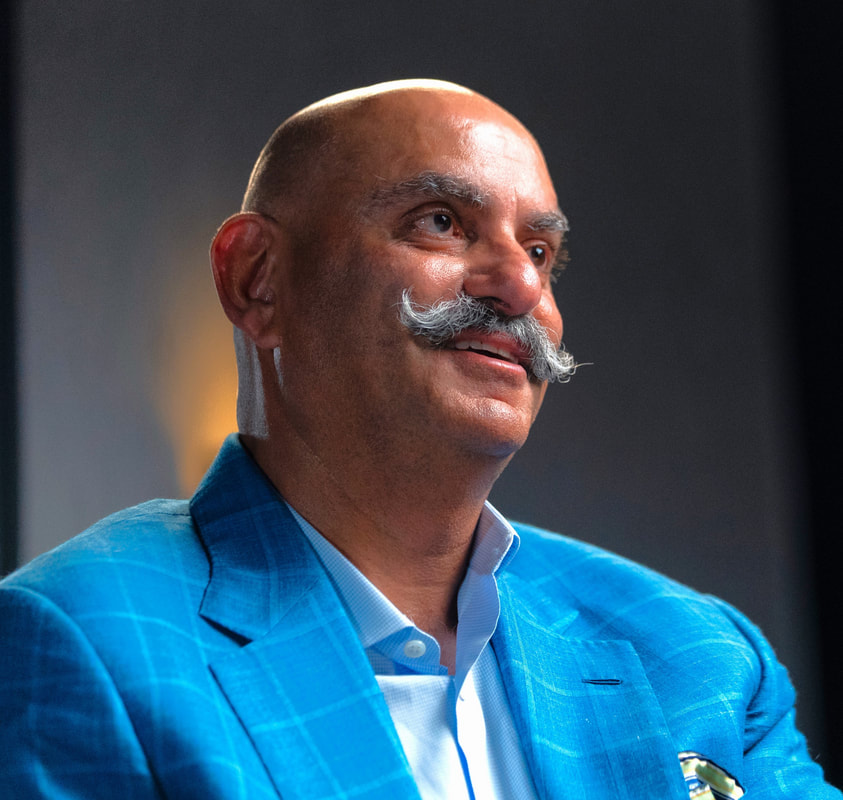
I have been made aware that scammers and fraudsters are using my name, picture and doctored videos to target people online with fraudulent attempts to send money to be invested in non-existent investment schemes or for compensation for investment tips. The examples I’ve seen so far have been in perpetrated in India, but they may be elsewhere too. These are totally fake. Please read below to protect yourself:
I can’t believe it’s been six years since I started doing an annual lecture in Prof. Arvind Navaratnam’s class on Value Investing at the Carroll School of Management (Boston College). I love Arvind, his students and Boston College.
While the topic of this talk was the same as the recent Peking U. lecture (The Quest for 10-100 Baggers), there are enough differences between the two lectures that make this worth watching even if you have seen the Peking U. lecture.
I repeated the lecture because I want to really etch these important concepts into my little brain. Once is not enough! So, to be candid, the motivation was to try to help myself.
Some salient differences between the two lectures is that the Q&As are completely different. This one went on for 2.5 hours while the Peking U. lecture is 1 hr. and 40 minutes. Finally, violating MLK’s advice to me, this one used (gasp!) slides.
Enjoy!
https://www.youtube.com/watch?v=IOoaNYQHaYY&t=2012s
Lecture Date: November 3, 2016Here is the link to the podcast:

I very much enjoyed this interview with Indian business news channel, ET NOW.
https://www.youtube.com/watch?v=VY5ObDlhvio
I didn't realize they'd print it as well!
And here is a shorter excerpt from the interview:
Enjoy!

I gave a talk in February 2014 at a TiE SoCal chapter event that focused on branding and marketing. It is a subject near and dear to my heart, but I am rarely asked to speak on it.
What is relevant to this blog however, is that towards the end of the session, I was asked a question on ways to compound wealth. Diehard compounding purists can start watching the video from 1:13:43.
https://www.youtube.com/watch?v=fkF9Npxfmn8
You might actually enjoy watching the entire video.
I very much enjoyed my first ever talk to students in China. Peking University's Guanghua School of Management is the best of the best. Prof, Jiang Guohua's Value Investing Course is the first such course ever offered in China. This talk was sponsored by Himalaya Capital.
Enjoy!
https://www.youtube.com/watch?v=Jo1XgDJCkh4
Update on Nov. 21, 2016
The best things in life are free. A well-wisher (and die-hard fan of this video) took it upon himself to transcribe the entire video at his cost! This generous fan sent it to me to share as I saw fit. Please note that this is an “automated transcript” that has had virtually no editing. So, here it is, typos and all:
Transcript of Mohnish Pabrai Lecture at Peking University (Guanghua School of Mgmt) -
Oct 14 2016
Enjoy!
Here is the link to the podcast:

Friends or relatives residing in India periodically ask me about how they can invest in the US equity markets. How can they invest in things like a ultra-low cost S&P 500 ETF or Berkshire Hathaway or Google etc. Well, it is not only possible, but quite streamlined.
Indian citizens residing in India are allowed to invest up to $250,000 every year overseas as per this notification issued by the Reserve Bank of India (RBI):
https://rbi.org.in/Scripts/NotificationUser.aspx?Id=10192&Mode=0
This means that a family of 4 can invest up to $1 million overseas in a given year.
There are a few U.S.-based discount brokerages like Interactive Brokers, TD Ameritrade,
Charles Schwab International Account through which Indian citizens residing in India can set up an account and trade U.S. stocks, mutual funds and ETFs. No US mailing address is required. Note that these accounts can be opened by citizens of most countries.
In fact, Interactive Brokers has a specific account type that allows Indian Residents to trade overseas. To start an application click here. The application materials need to be sent via email to this address: newaccounts.in@interactivebrokers.com. Their customer service number in India is +91.22.6128.9888. The Director of Sales in India is Ankit Shah. His phone number is +91.22.6128.9836, and his email address is ashah@interactivebrokers.com.
Interactive Brokers (IB) is one of my favorites. Not only can one trade US stocks at super low commissions with them, IB has made the most inroads into allowing global trading with some of the lowest frictional costs. Through a US Interactive Brokers account one can buy stocks in most of the major markets around the world. Thus, opening an account with them opens up far more than the US markets for Indian investors.
While the Indian markets offer plenty of compounding opportunities, it is not a bad idea for Indian investors to have atleast a small portion of their assets allocated to other geographies. US brokers and ETFs have some of the lowest frictional costs on the planet. And us compounders know all about keeping frictional costs low.
Note: I am not compensated in any way by any of the brokerages mentioned in this blog post.
The key to getting wealthy over a lifetime, even with modest income rests on three basic tenets:
1. Spending less than you earn.
2. Investing your savings in a low-cost index fund.
3. Starting very early. In you early 20s.
This site does not have much advice for you on how to spend less and save more, but my twin brother, Mr. Money Mustache does. Check out:www.mrmoneymustache.com/
Please view this entertaining (and highly educational) video:https://vimeo.com/183016901
And finally, here are Mr. Money Mustache's real 2013 and 2014 expenses:www.mrmoneymustache.com/2015/01/16/exposed-the-mmm-familys-2014-spending/
Consistently spending waaaay less than you earn is the most important of the three tenets. It provides us our critical compounding raw material. After that it is just a matter of how long the runway is (how many years) and the speed you're going (rate of compounding). Savings is the most important of the three.