I have been made aware that scammers and fraudsters are using my name, picture and doctored videos to target people online with fraudulent attempts to send money to be invested in non-existent investment schemes or for compensation for investment tips. The examples I’ve seen so far have been in perpetrated in India, but they may be elsewhere too. These are totally fake. Please read below to protect yourself:
I very much enjoyed my recent chat with SumZero CEO Divya Narendra. I discussed my thoughts on humanity’s impressive response to COVID-19, and the mental models I use to approach investing in the context of the pandemic.
I hope you are staying healthy and safe. The battle against the Coronavirus is extracting a high toll, but humans will prevail. This too shall pass.
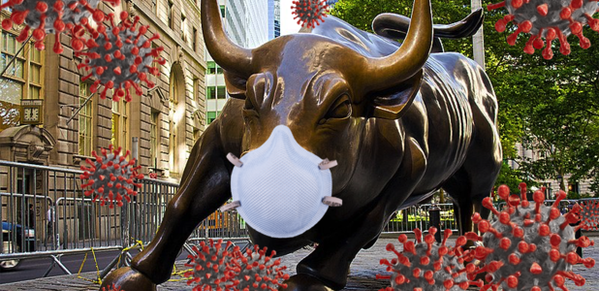
In late December 2016, I co-wrote an article on Forbes.com that introduced the "Uber Cannibals," a 5-stock investing strategy that invests in businesses aggressively buying back their own stock. This is a "set it and forget it for one year" strategy that rebalances every April when 5 companies are selected for the portfolio for the upcoming year.
We are now ready for the April 2020 picks.
Recap of 2019 Uber Cannibals:
As a recap, in my 3/31/17 blog post, we met Ms. Sonia Patel, who had embarked on her Uber Cannibals investing journey with $100,000 from her IRA account at Interactive Brokers. Sonia invested in the first 5 Uber Cannibals on 1/3/17, and then rebalanced her portfolio annually in April. The 2019 - 2020 Uber Cannibals were:
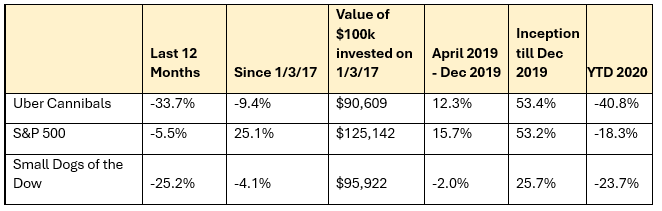
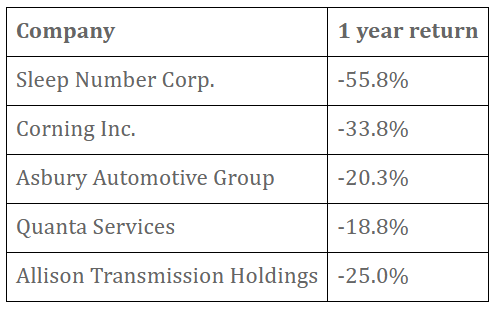
As of 3/30/20, Sonia's $100k was worth $90,609 (after trading costs), down 9.4%. If Sonia had instead invested in the S&P 500 over that period, she would be up 25.1% and her portfolio would be worth $125,142. Uber Cannibals were down 34% over the last 12 months and the S&P was down 6%.
Sonia's portfolio fell considerably in the Coronavirus-driven market sell off in the first few months of 2020. As of 12/31/19, Sonia's portfolio was neck-and-neck with the S&P 500, with her $100k worth $153,400 (after trading costs), up 53.4% since inception, while the same investment in the S&P 500 was worth $153,200, up 53.2%. Since then, Sonia's portfolio has fallen 40.8% year-to-date in 2020, while the S&P 500 has fallen 18%. The Uber Cannibals 5-stock portfolio is far more concentrated than the indices, so our lag here is not surprising. Over time, the Uber Cannibals portfolio should recoup these losses and then some. The Uber Cannibals strategy makes sense if you intend to follow it for at least a decade or two (or longer).
Corning, Quanta and Allison Transmission paid dividends totaling $1,177. Per our rules, Sonia reinvested those dividends back into the same businesses.
Please note, the Uber Cannibals performance includes trading costs and also assumes that stocks are bought at the high price of the day and sold at low price of the day, whereas S&P 500 and Small Dogs of the Dow performance does not include trading costs and assumes that stocks are bought at last close.
Below is the 12-month return of the 2019-2020 Uber Cannibals:
The New Uber Cannibals:We made a few tweaks to the Uber Cannibals strategy that will be implemented in this rebalance. The changes are summarized below:
For 2020 - 2021, our algorithms selected the following five Uber Cannibals:
Sell all the 2019 Uber Cannibals and invest the proceeds equally among the new kids. If you are a new investor to the Uber Cannibals, you can just equal weight the five stocks (i.e., invest the same amount of money in each of these five) and keep that portfolio until April 2021, when I'll provide the 2020 - 2021 portfolio on www.ChaiWithPabrai.com. Happy Cannibal Investing!If you invested in the Uber Cannibals in April 2019 in a taxable account, try to sell after no more than 364 days, to realize short term losses.
The five-stock Uber Cannibals strategy can be combined with the five-stock Shameless Cloning and Spinoffs strategies into the 15-stock Free Lunch Portfolio. While the Uber Cannibals rebalance in April, the Shameless Cloning and Spinoffs rebalance in December. You can find the 2020 picks for Shameless Cloning and Spinoffs in my post from December 2019.
Note, anyone who invests in any strategy needs to do their own research/due diligence and are themselves fully responsible for the outcome.

In December 2017, I co-authored an article in Forbes about The "Free Lunch" Portfolio, which combines the power of Uber Cannibals, Shameless Cloning and Spinoffs. An updated portfolio was published on the Shameless Cloning in December 2018. As a recap, our algorithms selected these 15 companies for 2019:
Uber Cannibals
Shameless Cloning
Spinoffs
The Free Lunch portfolio was up 21.7% in 2019, vs. 31.2% for the S&P 500. Since inception on January 1, 2018, on an annualized basis, the Free Lunch portfolio is up 0.01% while the S&P is up 12.0%. The Free Lunch is only 2 years old, so we can't draw any meaningful conclusions about its long-term performance yet. These are early days. Keep the faith. This is a long-term "set it and forget it" strategy. We don't recommend putting more than 10-20% of your nest egg into this strategy. And we think it only makes sense if you follow it for a decade, or two, or longer. Ideally, you would use this strategy in your IRA, so you wouldn't have to worry about realized gains.
The New 2020 Free Lunch PortfolioWe are now ready to rebalance the Free Lunch Portfolio for 2020. We made a few changes to the Shameless Cloning and Spinoffs strategies that we believe can select better companies and improve future performance. The changes are summarized below:
Shameless Cloning:
Spinoffs:
Here are the constituents for the upcoming year:
Uber Cannibals
Shameless Cloning
Spinoffs
If you are a new investor to the Free Lunch Portfolio, you can just equal weight these 15 stocks (i.e., invest the same amount of money in each of these 15) in early January 2020.
If you are already invested in the Free Lunch Portfolio, and you rebalanced the Uber Cannibals in April 2019 with the New Uber Cannibals, then sell all of the 2019 Spinoffs and Shamelessly Cloned businesses except Alphabet, Berkshire Hathaway, Citigroup and Hilton Grand Vacations, and invest the proceeds equally among the 6 new kids. You can do this in early January 2020.
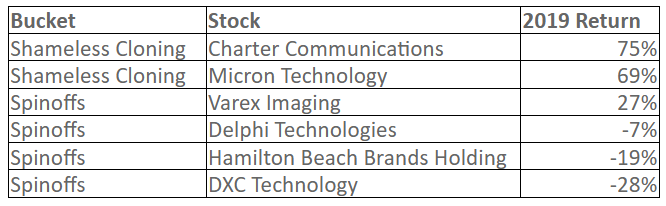
If you're investing in a taxable account, you may try to sell the losers (Hamilton Beach Brands Holding, DXC Technology and Delphi Technologies) in December 2019 to capture short-term losses and sell the winners (Charter Communications, Micron Technology and Varex Imaging) in early January 2020 to capture long-term gains.
These are the stocks to sell, along with their full-year 2019 returns:
As a reminder, the new Uber Cannibals get published every April, while new the Spinoffs and Shameless Cloning businesses are released in January. When we publish the new Uber Cannibals in April 2020, sell the Ubers that are no longer on the new list and invest the proceeds equally across the new Uber Cannibal picks. Then in January 2021, you'll rebalance the Spinoffs and Shameless Cloning ideas.
Enjoy!
Note, anyone who invests in any strategy needs to do their own research/due diligence and are themselves fully responsible for the outcome.

I very much enjoyed my discussion with Prof. Arvind Navaratnam’s class on Fundamental Analysis & Value Investing at the Carroll School of Management (Boston College). We discussed a few investing frameworks, the importance of investment mistakes, and how to look for businesses that transcend geography and currency.
Enjoy!
https://www.youtube.com/watch?v=kdGltV0eomU&feature=youtu.be
Here is the link to the podcast:
If you prefer reading over listening, here is the transcript.

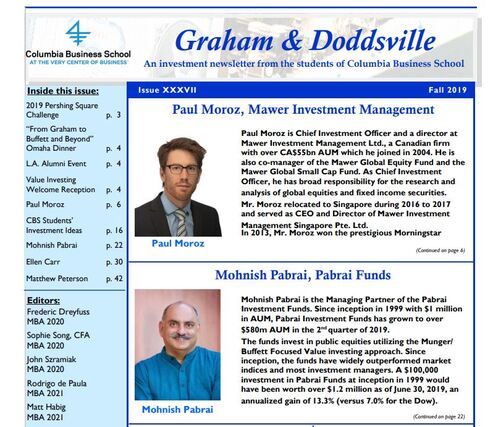
I enjoyed being interviewed for the Graham & Doddsville newsletter from the students of Columbia Business School. I discussed my journey that led to my starting Pabrai Funds, mistakes and learnings from the 2008 financial crisis and the importance of staying within one’s circle of competence.
The interview starts on Page 22: https://www8.gsb.columbia.edu/valueinvesting/sites/valueinvesting/files/files/Graham%26Doddsville_Issue37.pdf
Enjoy!
I very much enjoyed talking to John Mihaljevic for MOI Global’s Meet-the-Author Summer Forum 2019 about my book, The Dhandho Investor. We discussed the Patels and applying their low cost operating business model to investing. We also discussed arbitrage, taking advantage of “offering gaps,” risk-free bets, the art of selling, diversification and the changes I would make to The Dhandho Investor now.
Enjoy.
https://www.youtube.com/watch?time_continue=106&v=OgsKhFzyX2U
If you prefer reading over listening, here is the transcript:
https://moiglobal.com/mohnish-pabrai-the-dhandho-investor-201907/
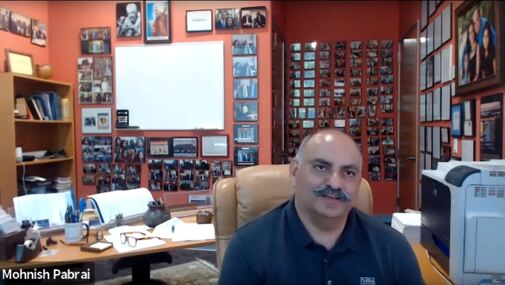
I very much enjoyed giving my lecture “Great Businesses vs. Great Investments” to the students of Peking University's Guanghua School of Management in Irvine. We discussed my stock picking games with Guy Spier and other investors, my love of shamelessly cloning, and the ten commandments of investment management.The presentation included a rich Q&A session on a diverse set of topics.
Enjoy!
https://www.youtube.com/watch?v=Kax8XnBU1ik
Here is the link to the podcast:
If you prefer reading over listening, here is the transcript.
I very much enjoyed being back in Ireland to give a talk to the Trinity Student Managed Fund at Trinity Business School, Trinity College in Dublin. We took a historical look at the performance of various global markets over time. We also had a wonderful Q&A during which I reflected on key lessons I've taken from Warren Buffett and Charlie Munger.
https://www.youtube.com/watch?v=_0XPurSI9cQ
Enjoy!
Here is the link to the podcast:
If you prefer reading over listening, here is the transcript.
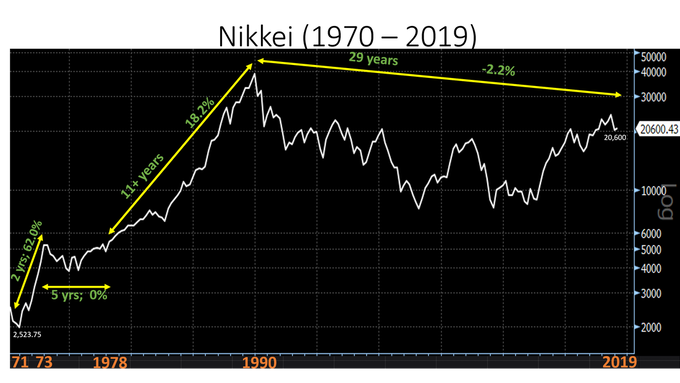
Update: The video inadvertently uses a wrong Nikkei chart at 18:46. Below is the correct chart:
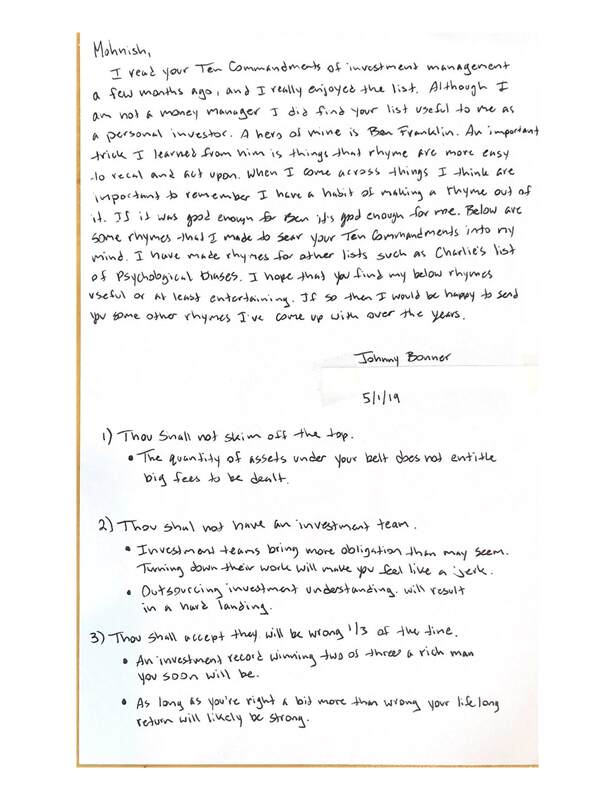
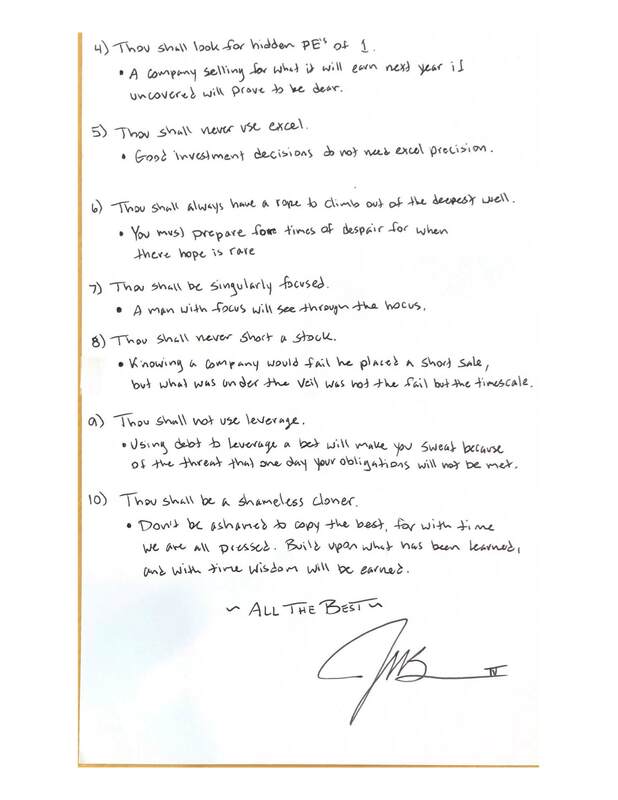
I received a wonderful note from an investor named Johnny Bonner who translated my Ten Commandments of Investment Management into verses that rhyme. I am sharing Johnny’s note here. Thank you Johnny!
Enjoy!
I very much enjoyed returning to the Investor’s Podcast with Preston Pysh and Stig Brodersen. We dove into cloning, the difficulty of beating a broad-based index like the S&P 500, and my lessons from owning a property and casualty insurance company.
Enjoy!
The interview host is an investor in Pabrai Funds and therefore has a financial interest in the funds’ performance, which creates a potential conflict of interest. The host was not compensated for this interview. The views expressed are those of the host and Mohnish Pabrai and do not constitute investment advice or a recommendation to invest.
https://www.theinvestorspodcast.com/episodes/tip241-value-investing-w-mohnish-pabrai/